
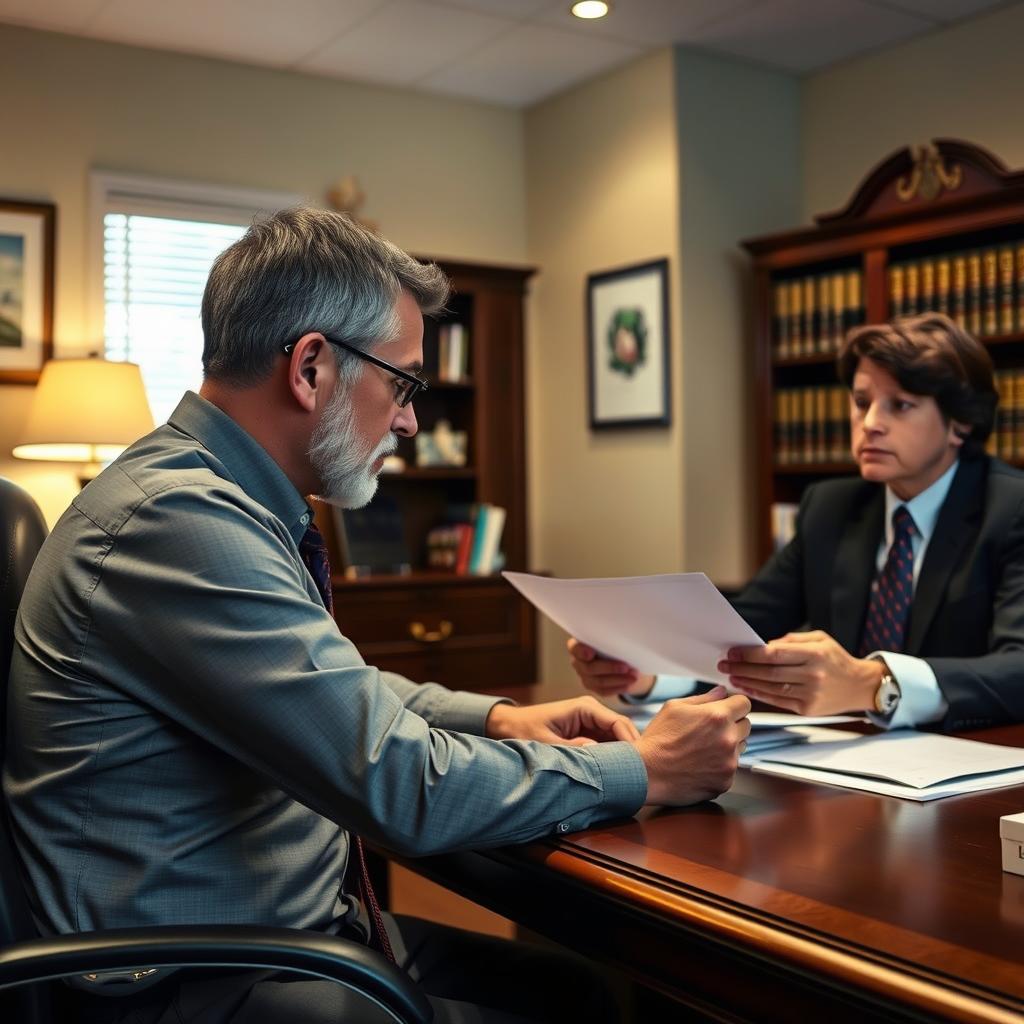
Murder Defense Lawyer Dinwiddie County, VA
A homicide accusation—whether still under investigation or already charged as murder—changes everything. In Dinwiddie County, the local Commonwealth’s Attorney prosecutes these cases actively, and law-enforcement agencies from the Dinwiddie Sheriff’s Office to the Virginia State Police bring substantial resources to bear. At Law Offices Of SRIS, P.C., Mr. Sris, a former prosecutor, and the firm’s Of Counsel attorneys know how the other side builds a homicide case. We work to protect your rights during the investigation, at the preliminary hearing in Dinwiddie County General District Court, and throughout trial in Dinwiddie County Circuit Court. For a confidential consultation, call (888) 437‑7747.
Law Offices Of SRIS, P.C. – Advocacy Without Borders.
What Murder Defense Means in Dinwiddie County
Murder is the most serious offense in Virginia’s criminal code. First-degree murder (Va. Code § 18.2‑32) is a Class 2 felony, carrying a sentence of 20 years to life in prison. Second-degree murder (Va. Code § 18.2‑33) is punishable by 5 to 40 years. Plea bargaining is permitted under Rule 3A:8 of the Rules of the Supreme Court of Virginia; the Commonwealth’s Attorney and defense counsel may negotiate a plea agreement, which the court may accept or reject.
In Dinwiddie County, murder cases begin with a preliminary hearing in the General District Court, where a judge determines whether probable cause exists to send the matter to the Circuit Court for trial. The Eleventh Judicial District, which includes Dinwiddie County, follows the same procedural rules as the rest of Virginia; defendants have an absolute right to a jury trial in Circuit Court. Experienced defense counsel can challenge the prosecution’s evidence at every stage, from the sufficiency of the arrest warrant through rulings on pretrial motions and the presentation of testimony at trial.
How Mr. Sris and the Firm’s Of Counsel Attorneys Handle Murder Defense Cases
A thorough murder defense begins the moment a person learns they are under investigation. Mr. Sris and the firm’s Of Counsel attorneys work with private investigators, forensic experts, and, where appropriate, mitigation attorney to evaluate the prosecution’s evidence—witness statements, physical evidence, DNA analysis, cell‑phone records, and law-enforcement reports. Because Mr. Sris is a former prosecutor, we understand how charging decisions are made and can often engage with the Commonwealth’s Attorney before formal charges are filed.
Once charges are brought, our work focuses on challenging the admissibility of evidence, identifying inconsistent witness accounts, and, when applicable, presenting an affirmative defense such as self‑defense, accident, or mistaken identity. The timeline in a murder case can extend for months; throughout, we keep clients informed and prepare for the possibility of trial before a Dinwiddie County jury. Every defense is tailored to the unique facts of the case—there is no one‑size‑fits‑all approach to homicide litigation.
Understanding the Role of Grand Juries in Murder Cases
In Virginia, a grand jury is a body of citizens that reviews evidence presented by the Commonwealth’s Attorney to decide whether there is probable cause to indict a defendant on a felony charge. For murder charges, the grand jury process is a critical stage. The proceedings are not open to the public, and the defense is not permitted to present evidence or cross‑examine witnesses during the session. The grand jury hears only the prosecution’s side, which makes it important that defense counsel has thoroughly investigated the case and is prepared to challenge the indictment through pre‑trial motions if procedural errors or insufficient evidence exist.
An indictment returned by a grand jury allows the case to move forward to trial in the Circuit Court. Defense attorneys can file a motion to quash the indictment if it is based on illegal evidence, a violation of the defendant’s rights, or other defects. The grand jury stage also provides an opportunity for the defense to engage in informal discussions with the prosecutor about the strengths and weaknesses of the evidence, which may influence later plea discussions or the decision to proceed to trial.
Mitigation Evidence and Sentencing Considerations
If a murder case results in a conviction—whether by trial or plea—the sentencing phase can be as complex as the trial itself. Virginia law permits the introduction of mitigation evidence, which includes any information about the defendant’s background, character, mental health, or circumstances of the offense that might persuade a judge or jury to impose a lesser sentence. This can involve testimony from family members, mental health professionals, and employment records. In first‑degree murder cases, where the punishment can range from 20 years to life, presenting a coherent mitigation narrative often requires extensive preparation. Defense counsel works with mitigation attorney to compile records, interview witnesses, and develop a sentencing memorandum that provides a complete picture of the defendant’s life beyond the crime.
For second‑degree murder, the sentencing range is 5 to 40 years. The judge has discretion, and a well‑prepared mitigation presentation can influence the sentence imposed. The same principles apply during plea negotiations, where a defendant may agree to plead to a lesser charge or a specific sentence in exchange for cooperation or other considerations. Defense attorneys who are familiar with the sentencing practices of Dinwiddie County Circuit Court judges can offer clients a realistic assessment of what to expect.
About Mr. Sris and the Firm’s Of Counsel Attorneys
Mr. Sris, Owner and Founder of Law Offices Of SRIS, P.C., has built a multi‑state practice that concentrates on complex criminal defense. He is a former prosecutor who has been practicing law since 1997. Before founding the firm, he gained firsthand trial experience that now informs his defense strategies. Mr. Sris testified before the Virginia House Courts of Justice Committee in support of 2019 HB 635 (chief patron Del. David Bulova).
The firm’s Of Counsel attorneys bring extensive combined legal experience to each murder case. The team includes a former Virginia State Trooper whose 15‑year law‑enforcement career provides insight into how police conduct homicide investigations, gather evidence, and prepare witnesses. Mr. Sris and the firm’s Of Counsel attorneys appear in Dinwiddie County courts and work collaboratively to examine every facet of the prosecution’s case.
Learn more about the firm’s Virginia criminal defense practice.
Frequently Asked Questions
How does a Virginia lawyer defend against murder charges?
Defense strategies for murder in Virginia may include challenging the credibility of witness testimony, examining the chain of custody for physical evidence, and presenting experienced attorney medical or forensic testimony to contest the cause of death. An experienced attorney evaluates the specific facts under Va. Code § 18.2‑32 and § 18.2‑33 to develop the strong $1.
What should I do if I am facing a murder investigation in Dinwiddie County?
Do not speak with law enforcement without an attorney present. Anything you say can be used to establish probable cause or to impeach your testimony at trial. Immediately contact an experienced defense attorney who is familiar with Dinwiddie County courts. Early involvement by counsel can influence whether charges are filed and, if they are, the nature of those charges.
What is the difference between first‑degree and second‑degree murder in Virginia?
First‑degree murder is a willful, deliberate, and premeditated killing—or a killing committed during an enumerated felony, such as robbery or arson. It is a Class 2 felony with a sentence of 20 years to life. Second‑degree murder covers all other non‑capital murder and carries a penalty of 5 to 40 years in prison. The distinction often turns on the presence of premeditation and the specific circumstances of the death.
Do I need a criminal defense lawyer in Dinwiddie County if I am only under investigation?
Yes. Even before an arrest, investigators may obtain search warrants, interview witnesses, and gather forensic evidence. An attorney can advise you on how to respond to law‑enforcement inquiries, preserve evidence that may be favorable to your defense, and prepare for the possibility of an arrest. Early representation can materially affect the outcome.
How does the court process work for murder charges in Dinwiddie County?
A murder charge typically begins with an arrest and an initial appearance before a magistrate who sets bond. The case then proceeds to a preliminary hearing in Dinwiddie County General District Court, where the judge determines whether probable cause exists to send the case to the Circuit Court. If probable cause is found, the Commonwealth’s Attorney presents the case to a grand jury, which may return an indictment. The case is then tried in Dinwiddie County Circuit Court, where the defendant has the right to a jury trial.
Can a murder conviction be expunged in Virginia?
Virginia law allows expungement for charges that end in an acquittal, a nolle prosequi, or a dismissal. However, a conviction for murder cannot be expunged. If you have been charged but not convicted, you may be eligible to have the record sealed under the state’s expungement provisions. An attorney can review your specific situation and advise whether you qualify.
Related criminal defense representation in other Virginia localities:
Fairfax County |
Prince William County |
City of Fairfax |
Manassas |
Falls Church
Primary‑source authority:
Va. Code § 18.2‑32 (first‑degree murder) |
Va. Code § 18.2‑33 (second‑degree murder) |
Virginia’s Judicial System
Attorney advertising. Prior results do not guarantee a similar outcome.
Case results depend on a variety of factors unique to each case.