
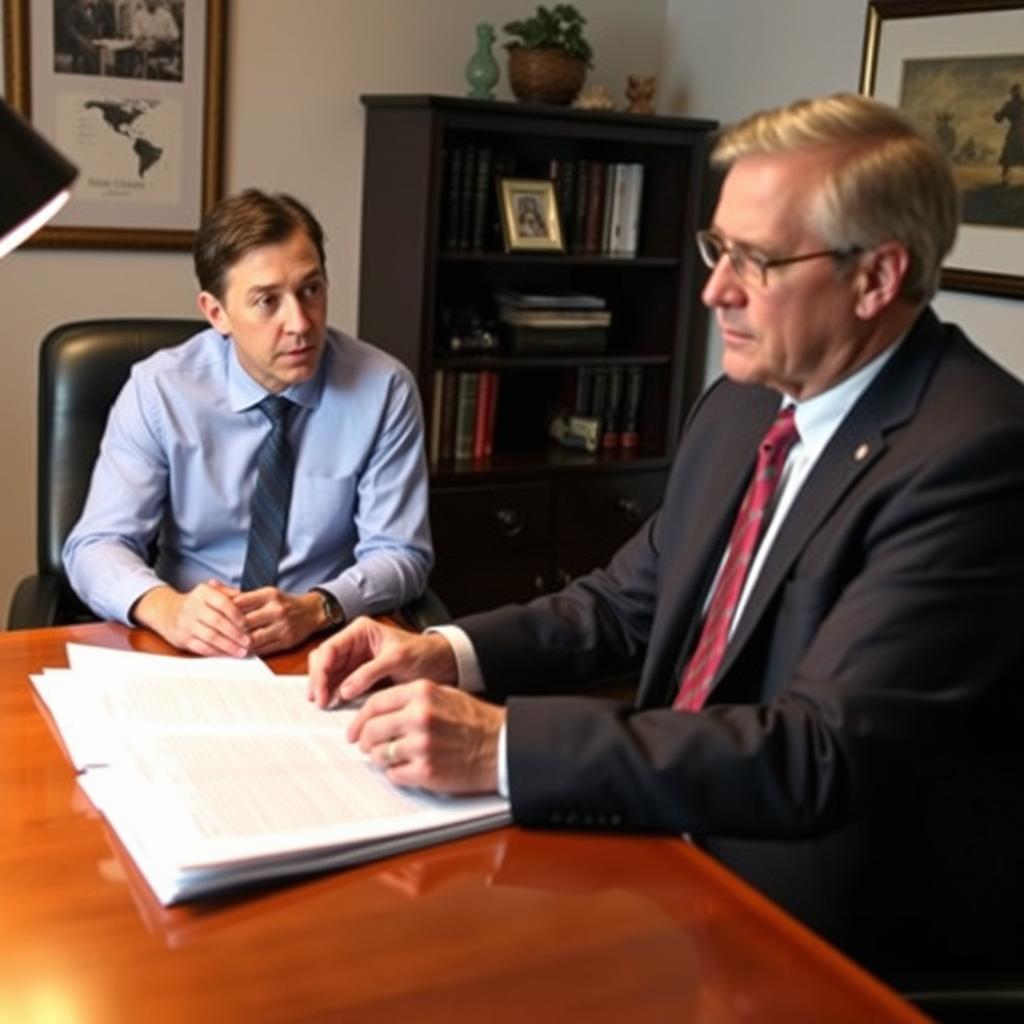
Indemnity Lawyer New Kent County, VA
Indemnity agreements appear in construction contracts, service agreements, distribution deals, and commercial leases across New Kent County. These clauses shift the financial burden of a loss, claim, or liability from one party to another. When a dispute over an indemnity provision escalates, the consequences can reach far beyond a single transaction—businesses face significant exposure, personal assets may be at risk, and the future of a commercial relationship hangs on how the clause is interpreted. Law Offices Of SRIS, P.C. represents clients in indemnity disputes throughout New Kent County, drawing on long experience with Virginia contract law. Our Richmond location, situated along the I‑64 corridor between Richmond and Williamsburg, serves individuals and businesses in New Kent, Providence Forge, Quinton, and the surrounding communities. Mr. Sris and his Of Counsel appear regularly in the New Kent County General District Court and the New Kent County Circuit Court, where indemnity and breach‑of‑contract claims are litigated. Whether you need to enforce an indemnity provision, defend against a claim for contractual indemnification, or negotiate indemnity language in a proposed agreement, early involvement of an experienced contract attorney can help protect your interests. Reach Law Offices Of SRIS, P.C. at (888) 437‑7747 to schedule a consultation. Law Offices Of SRIS, P.C. – Advocacy Without Borders.
What Indemnity Means in New Kent County
Indemnity is a promise by one party to compensate another for a loss or liability that may arise out of a specific transaction or relationship. In Virginia, indemnity obligations are governed by the terms of the contract and by common‑law principles that courts apply when a written agreement is silent or ambiguous. The Virginia Uniform Commercial Code (Va. Code § 8.1A‑101 et seq.) supplies default rules for transactions in goods, but most indemnity disputes in New Kent County arise from service contracts, construction contracts, and business‑to‑business agreements that are governed by general contract law. For construction contracts, Va. Code § 11‑4.1 places limits on indemnity provisions that attempt to shift responsibility for the indemnitee’s own negligence, a statutory protection that contractors and subcontractors need to understand before signing.
New Kent County’s mix of residential development, commercial construction, and agricultural operations means that indemnity clauses are embedded in a wide range of everyday agreements—from roofing subcontracts to equipment‑supply arrangements to distribution deals. When a dispute arises, the forum often depends on the amount in controversy. Under Virginia law, civil claims within the jurisdictional limit of the General District Court may be filed in the General District Court (Va. Code § 16.1‑77(1)). Claims above that limit proceed in the Circuit Court, where formal discovery and jury trials are available. Both courts sit at 12001 Courthouse Circle in New Kent, and Mr. Sris and his Of Counsel are familiar with their procedural requirements. For any indemnity claim, time is also a factor: an action on a written contract must be brought within five years, while an oral contract is subject to a three‑year statute of limitations (Va. Code § 8.01‑246). Understanding which court to file in and when to file is critical to preserving a claim.
How Mr. Sris and His Of Counsel Handle Indemnity Cases
Indemnity disputes often begin when one party demands that the other cover a loss—a settlement payment, a judgment, or defense costs—and the other party resists. The first step is careful review of the contract language, including any insurance requirements, additional‑insured endorsements, and notice‑of‑claim provisions that may affect the indemnitor’s obligations. Mr. Sris and his Of Counsel evaluate whether the clause is clear and unambiguous, whether any statutory limits apply (such as Va. Code § 11‑4.1 in the construction context), and whether the claim falls within the scope of the indemnity promise. Early demand letters and direct negotiation often resolve the matter without extended litigation.
When negotiation does not produce a satisfactory result, the team prepares the case for trial in the New Kent County General District Court or Circuit Court, depending on the amount in controversy. The litigation process may involve discovery, motions challenging the enforceability or scope of the indemnity clause, and, if necessary, a trial on the merits. Throughout the process, Mr. Sris and his Of Counsel work to position their clients for a favorable resolution—whether through voluntary settlement, a dispositive motion, or a verdict—while keeping the client informed of the costs, timeline, and strategic options at each stage.
About Mr. Sris and His Of Counsel Team
Mr. Sris, Owner and Founder of Law Offices Of SRIS, P.C., has practiced law since 1997 and is admitted in Virginia, Maryland, the District of Columbia, New Jersey, and New York. A former prosecutor, he testified before the Virginia House Courts of Justice Committee in support of 2019 HB 635 (chief patron Del. David Bulova). His background includes contract litigation, business disputes, and trial advocacy. Mr. Sris is supported by a network of Of Counsel—non‑employee attorneys engaged through Excella—who bring additional depth in commercial litigation, contract negotiation, and Virginia civil procedure. The team handles indemnity and other contract matters throughout Virginia, including appearances in the New Kent County courts.
Mr. Sris and his Of Counsel have handled matters across multiple practice areas since 1997. Results may vary. When you engage the firm, you gain access to attorneys who can evaluate the specific language of your indemnity agreement and guide you through the enforcement or defense process with an understanding of how Virginia courts apply contract‑law principles.
Frequently Asked Questions
What is an indemnity clause in a Virginia contract?
An indemnity clause is a contractual promise by one party (the indemnitor) to compensate another party (the indemnitee) for a specified loss, damage, or liability. The obligation can be broad—covering losses regardless of fault—or narrow, limited to losses caused by the indemnitor’s own actions. Virginia courts interpret indemnity clauses according to their plain language, and they will enforce an unambiguous provision unless a statute or public policy limits it. In construction contracts, Va. Code § 11‑4.1 overrides clauses that purport to indemnify a party against its own negligence beyond certain bounds. Outside of construction, common‑law principles generally control. Because the precise wording determines the scope of the obligation, having an attorney review the clause before a dispute arises is often the most cost‑effective step.
How is indemnity different from a hold‑harmless agreement?
In most commercial contexts, the terms “indemnity” and “hold harmless” are used interchangeably, though some authorities distinguish them by the type of relief each provides. Indemnity is frequently viewed as a right to reimbursement for a loss already sustained, while a hold‑harmless provision may also require the promisor to prevent a loss from occurring in the first place. In practice, Virginia courts often treat the phrases as creating a single obligation, focusing on the actual language of the agreement rather than the label. The important issue is whether the clause clearly states what risks are covered, who bears the duty to defend, and which party is responsible for costs, expenses, and attorney fees. A well‑drafted clause will address all of these points.
Can I enforce an indemnity agreement if the other party refuses to pay?
Yes, an indemnity agreement is enforceable in Virginia if it is supported by consideration, its terms are clear, and it does not violate any statute or public policy. When the indemnitor refuses to honor its obligation, the indemnitee may file a breach‑of‑contract action in the appropriate New Kent County court. The court will examine the contract language, the nature of the underlying loss, and any defenses raised by the indemnitor—such as ambiguity, unconscionability, or the indemnitee’s failure to give timely notice. A written demand letter from an attorney often prompts compliance without litigation. If a lawsuit becomes necessary, the claim can be pursued in the General District Court or the Circuit Court depending on the amount in controversy.
How long do I have to file a claim for breach of an indemnity agreement?
For a written indemnity agreement, the statute of limitations in Virginia is five years from the date of breach; for an oral agreement, it is three years. These deadlines are set by Va. Code § 8.01‑246. Because the limitation period can begin to run when the indemnitor refuses to perform—or, in some situations, when the indemnitee’s liability is fixed—it is important to consult counsel promptly after a dispute arises. Waiting too long may bar the claim entirely. Both the General District Court and the Circuit Court in New Kent County will dismiss a lawsuit filed after the limitations period has expired.
Do I need a lawyer to enforce an indemnity clause?
There is no legal requirement that a party hire a lawyer to enforce an indemnity clause, but self‑representation carries substantial risks. Contract interpretation requires careful analysis of the agreement’s text, the applicable Virginia statutes, and the procedural rules of the court. An attorney can assess whether the clause covers the loss at issue, identify viable defenses, and present the claim in a manner that meets the court’s evidentiary standards. In New Kent County, the General District Court handles smaller claims under more relaxed procedures, while the Circuit Court’s formal rules demand close attention to pleading and discovery obligations. For guidance on your specific situation, reach Law Offices Of SRIS, P.C. at (888) 437‑7747.
Fairfax County contract law legal services •
Falls Church contract dispute attorneys •
Prince William County contract litigation •
Manassas contract lawyers •
Fairfax City contract representation
Official Virginia sources:
Virginia Code § 8.01‑246 — Statute of limitations for contracts •
Virginia Code § 16.1‑77 — General District Court civil jurisdiction •
Virginia Circuit Courts
Attorney advertising. Prior results do not guarantee a similar outcome. Results may vary.
Case results depend on a variety of factors unique to each case.