
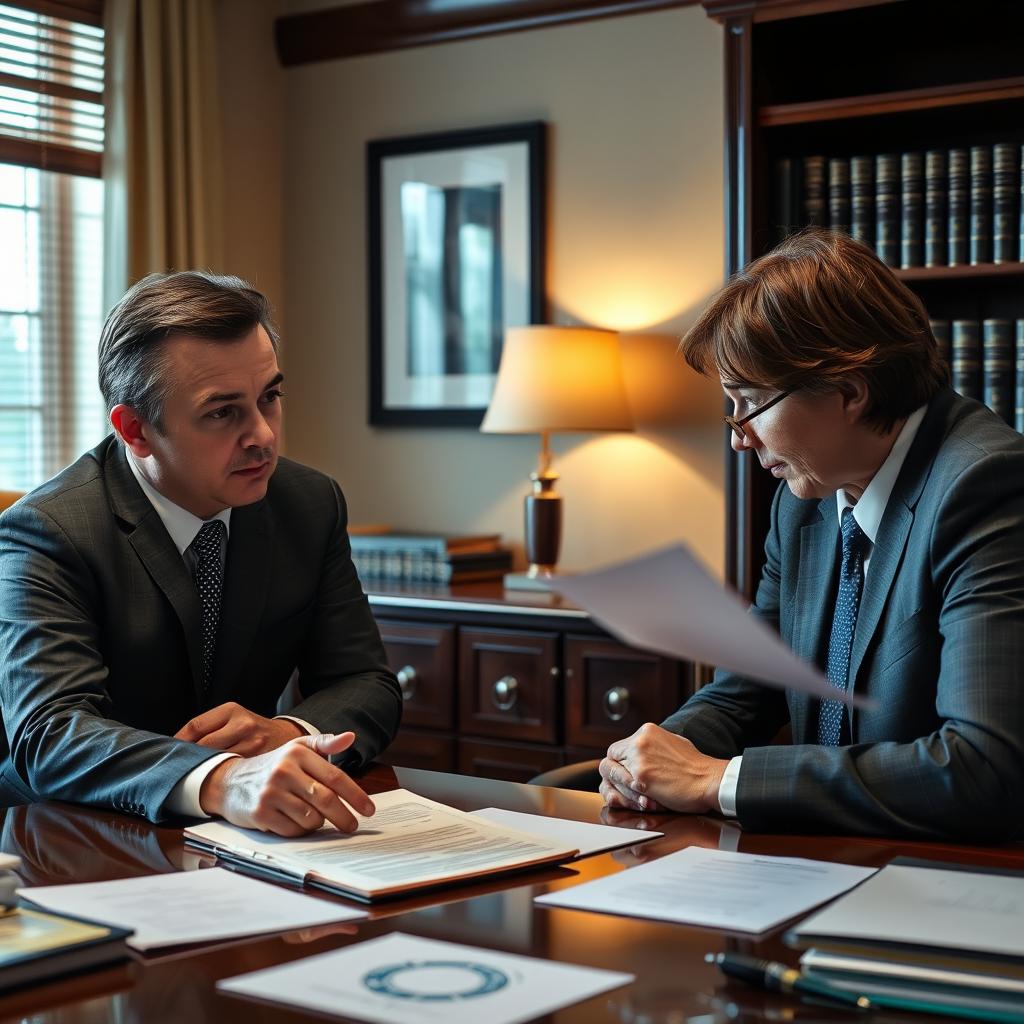
Business Estate Planning Lawyer Fluvanna County, VA
For business owners in Fluvanna County, the line between personal and enterprise assets often blurs over decades of operation. A partnership founded in Palmyra, a family-run enterprise near Lake Monticello, or a sole proprietorship in Fork Union each carries legal and financial threads that reach directly into the owner’s personal estate. Business estate planning addresses that intersection — ensuring that what you have built for your business passes to the people you intend, in the manner you choose, without unnecessary court involvement or avoidable tax consequences. Law Offices Of SRIS, P.C., practicing since 1997, represents business owners throughout Fluvanna County in structuring ownership transitions, drafting buy‑sell agreements, coordinating business interests with personal estate documents, and resolving disputes that arise when those plans are challenged. Mr. Sris and his Of Counsel team bring focused experience to business estate planning matters, working with clients to design durable plans that account for both Virginia business law and the practical realities of operating in a rural, close‑knit community. Reach our firm at (888) 437‑7747 to request a consultation. Law Offices Of SRIS, P.C. – Advocacy Without Borders.
What Business Estate Planning Means in Fluvanna County
In Fluvanna County, business estate planning is not a single transaction but a structured process that aligns how a business interest will be transferred upon an owner’s retirement, disability, or death. The county’s economic landscape — small manufacturing, agriculture, professional services, and retail operations clustered around Palmyra and the Route 15 corridor — shapes the planning conversation. Many area businesses are closely held, with ownership concentrated in a single family or a small group of partners. Virginia law, through the Virginia Stock Corporation Act (Va. Code § 13.1‑601 et seq.), the Virginia Limited Liability Company Act (Va. Code § 13.1‑1000 et seq.), and the Virginia Uniform Partnership Act (Va. Code § 50‑73.79 et seq.), defines how ownership interests may be transferred, what default rules apply when no written plan exists, and when court approval is required. Without a tailored business estate plan, a business interest becomes part of the owner’s probate estate, exposing it to delay, public record, and the possibility that a court will authorize a transfer that disrupts operations or disregards the owner’s wishes.
Local practice in the Fluvanna County Circuit Court — the court of general jurisdiction for civil matters exceeding — follows Virginia’s statutory framework for business governance and probate. Disputes over business valuation, interpretation of operating‑agreement succession clauses, or the validity of buy‑sell provisions often land in this court. While many business estate planning matters are resolved outside litigation through properly drafted documents, the possibility of a contested proceeding underscores why planning specific to Virginia’s statutory environment matters. Counsel familiar with the local court’s expectations can structure agreements that hold up under scrutiny. Mr. Sris and his Of Counsel team appear regularly in Virginia circuit courts, including the Fluvanna County Circuit Court at 72 Main Street in Palmyra, and understand the procedural rhythm that applies when a business succession or ownership dispute reaches litigation. By planning ahead, business owners can define clear transfer mechanisms — such as cross‑purchase agreements, entity redemption plans, or trust‑based ownership structures — that keep the enterprise stable and ensure continuity for employees, customers, and family members.
How Mr. Sris and His Of Counsel Handle Business Estate Planning Cases
Every business estate planning engagement begins with a thorough inventory of the business structure, ownership documents, and the owner’s personal estate plan. Mr. Sris and his Of Counsel team review the entity’s formation documents — articles of incorporation, operating agreements, or partnership agreements — to identify existing transfer restrictions, buy‑sell provisions, and default provisions that may conflict with the owner’s objectives. For corporations, attention turns to shareholder agreements and bylaws. For limited liability companies, the operating agreement is the controlling document, and many template agreements lack adequate succession language. A gap between the business’s internal governance and the owner’s will or trust can create confusion that courts must later resolve. The firm works to harmonize these instruments so that the business interest moves precisely as the owner intends.
After the diagnostic phase, the firm drafts or revises the necessary documents. This may include a shareholder or member buy‑sell agreement funded by life insurance, an updated operating agreement with clear valuation and transfer terms, or a combination of a revocable living trust and entity‑level succession provisions that place the business interest outside probate. Mr. Sris and his Of Counsel also coordinate with the client’s accountant and financial advisor to analyze tax implications under current Virginia and federal law, including the federal estate tax applicable exclusion and any Virginia‑specific considerations that affect business valuation for transfer purposes. When a business owner passes away without a plan, the firm handles probate and estate administration for the business interest, working with the personal representative to preserve the enterprise’s value while navigating statutory requirements. Throughout the process, the focus stays on practical outcomes: keeping the doors open, protecting employees, and honoring the legacy the owner built.
About Mr. Sris and His Of Counsel Team
Mr. Sris, Owner and Founder of Law Offices Of SRIS, P.C., has practiced since 1997 and is admitted to the bars of Virginia, Maryland, the District of Columbia, New Jersey, and New York. His background includes experience as a former prosecutor, and he has testified before the Virginia House Courts of Justice Committee in support of 2019 HB 635 (chief patron Del. David Bulova). Mr. Sris keeps his personal caseload intentionally small, which allows him to work closely with his Of Counsel on the planning and litigation matters the firm accepts. The Of Counsel attorneys who collaborate on business estate planning matters bring additional depth in business law, contract negotiation, and probate litigation. Together, Mr. Sris and his Of Counsel bring over 120 years of combined legal experience to the firm’s clients, backed by over 4,739 documented firm-wide results. Results may vary.
Frequently Asked Questions
What is business estate planning, and how does it differ from personal estate planning?
Business estate planning is the process of arranging for the orderly transfer of a business interest upon the owner’s retirement, disability, or death, whereas personal estate planning addresses the distribution of an individual’s personal assets. For a business owner, the two disciplines must work together because a business interest is often the most valuable asset in the personal estate. In Fluvanna County, Virginia law governs how ownership transfers through probate, which can delay or disrupt business operations if no plan exists. A business estate plan coordinates business‑transfer mechanisms — such as a buy‑sell agreement, an updated operating agreement, or a trust that holds the business interest — with the owner’s will and overall estate objectives, keeping the enterprise under the control of the people the owner trusts.
Why do I need a lawyer to create a business estate plan in Fluvanna County?
Engaging a lawyer helps ensure that the plan complies with Virginia business statutes, properly coordinates with the owner’s personal estate documents, and reduces the risk of future litigation. Virginia’s Stock Corporation Act, LLC Act, and Uniform Partnership Act contain default provisions that may conflict with an owner’s goals if no governing language is drafted. A lawyer who handles business estate planning can tailor the entity’s operating agreement or buy‑sell provisions to override those defaults and meet the owner’s specific needs. Additionally, if a dispute reaches the Fluvanna County Circuit Court, having a plan drafted with litigation in mind increases the likelihood that the court will enforce it as written. To discuss creating or updating your business estate plan, reach Law Offices Of SRIS, P.C. at (888) 437‑7747.
What happens to my business if I pass away without a business estate plan?
Without a plan, the business interest becomes part of the owner’s probate estate and passes according to Virginia’s intestacy laws or the terms of the owner’s will, which may not account for the complexities of business ownership. In many cases, this means that ownership transfers to a spouse or children who may lack the experience or desire to run the enterprise. The probate process in Fluvanna County Circuit Court can take months, during which the business may lose value while awaiting formal transfer. If the business is operated as a partnership or multi‑member LLC, the death of an owner may trigger default dissolution provisions under Virginia law unless an operating agreement or partnership agreement provides otherwise. A properly structured plan can keep the business operational and place authority in the hands of a chosen successor.
What documents are typically part of a business estate plan?
A comprehensive business estate plan often includes a buy‑sell agreement, a revised operating agreement or partnership agreement with succession provisions, and coordination between the business documents and the owner’s personal estate planning instruments such as a will or trust. Depending on the entity type, additional documents may be needed — for example, corporate resolutions addressing share transfers upon death, or beneficiary designations on business‑owned life insurance policies used to fund a buy‑out. The specific set of documents depends on the business’s structure, the number of owners, and whether ownership will pass to family members, co‑owners, or third parties. An attorney can identify which instruments your situation requires. For a consultation on your specific circumstances, contact Mr. Sris and his Of Counsel at (888) 437‑7747.
Outbound authority: Virginia Code Title 13.1 · SCC business entity filings · Virginia Courts
Attorney advertising. Prior results do not guarantee a similar outcome. Results may vary. Law Offices Of SRIS, P.C. maintains a location in Woodstock, Virginia, and serves clients in Fluvanna County and throughout the Commonwealth. Consultation by appointment — (888) 437‑7747.
Case results depend on a variety of factors unique to each case.